

[ad_1]
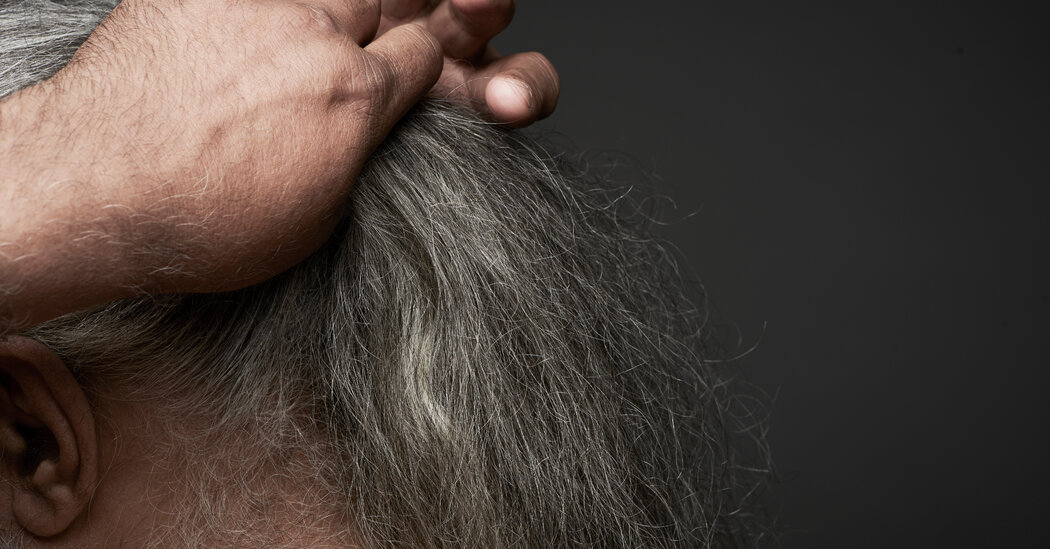
Several of the signs of aging are invisible, gradual, and refined — improvements in cell division ability, cardiac output and kidney functionality never just clearly show up in the mirror. But grey hairs are just one of the most noticeable clues that the body isn’t doing work like it utilized to.
Our hair turns gray when melanin-developing stem cells halt functioning appropriately. A new research in mice, but with implications for people and published Wednesday in the journal Mother nature, offers a clearer image of the mobile glitches that transform us into silver foxes and vixens.
“This is a genuinely massive stage towards understanding why we gray,” said Mayumi Ito, an creator of the review and a dermatology professor at New York University’s Grossman College of Medicine.
Not like embryonic stem cells, which acquire into all kinds of diverse organs, adult stem cells have a additional established path. The melanocyte stem cells in our hair follicles are dependable for generating and retaining the pigment in our hair.
Just about every hair follicle retains immature melanocyte stem cells in storage. When they are desired, those people cells vacation from a single element of the follicle to yet another, where proteins spur them to mature into pigment-manufacturing cells, offering hair its hue.
Researchers assumed that grey hair was the result of that pool of melanocyte stem cells working dry. However, past research with mice produced Dr. Ito and her co-creator, Qi Sun, ponder if hair could reduce its pigment even when stem cells are continue to current.
To study far more about stem mobile conduct during different phases of hair development, the scientists put in two several years monitoring and imaging particular person cells in mouse fur. To their amazement, the stem cells traveled again and forth within the hair follicle, transitioning into their experienced, pigment-generating condition and then out of it once more.
“We had been amazed,” explained Dr. Sunlight, who stated viewing a person team of stem cells switching back again and forth concerning mature and young states did not match up with current explanations.
But as time wore on, the melanocyte cells couldn’t continue to keep up the double act. A hair falling out and escalating again takes a toll on the follicle, and inevitably, the stem cells stopped creating their journey, and therefore, stopped receiving protein indicators to make pigment. From then on, the new hair advancement didn’t get its dose of melanin.
The scientists even more explored this influence by plucking hairs from mice, simulating a speedier hair advancement cycle. This “forced aging” led to a buildup of melanocyte stem cells trapped in their storage place, no lengthier creating melanin. The mice’s fur went from darkish brown to salt-and-pepper.
Though the research was conducted with rodents, the researchers say their results really should be related to how human hair will get and loses its shade. What is more, they hope their results could be a move towards preventing or reversing the graying approach.
Melissa Harris, a biologist at the College of Alabama at Birmingham who was not concerned with the examine, mentioned the conclusions assistance “clinch” previous proof she’s found suggesting that “not all melanocyte stem cells are created equivalent, and even if you have some remaining about, they may not be practical.”
Dr. Harris explained she normally takes the study’s results about its “forced aging” of mouse hair “with it’s possible a tiny little bit of a grain of salt,” as a plucked hair might not behave the very same as normally aged hair. But she discovered the examine worthwhile, not just due to the fact a overcome for graying hair may be a strike with the community the insights into stem cell actions may possibly help scientists recognize issues like most cancers and mobile regeneration.
“I consider sometimes people choose the hair for granted,” she mentioned, “but in a feeling, it helps make it essentially genuinely uncomplicated for us to see possible techniques in which ageing or other perturbations have an impact on our bodies.”
[ad_2]
Resource connection